Free Government iPhone in North Carolina: Lifeline Options
North Carolina residents can check Lifeline eligibility and compare phone offers by ZIP code. Food and Nutrition Services, NC Medicaid, SSI, income, housing, veterans, or qualifying Tribal routes may help prove eligibility, but iPhone availability remains provider-dependent.
Lifeline is active in North Carolina. North Carolina Food and Nutrition Services (FNS/SNAP) through the North Carolina Department of Health and Human Services and county DSS offices, NC Medicaid through the North Carolina Department of Health and Human Services, SSI, qualifying income, housing assistance, veterans benefits, or Tribal programs may help prove eligibility. A specific iPhone is not assured; availability varies by provider, ZIP code, stock, fees, and current terms.
Lifeline Free iPhone is independent and informational only. We are not a government agency, the Lifeline administrator, Apple, a wireless carrier, or a phone distributor. We do not approve applications, collect sensitive eligibility data, or guarantee specific device models.

Quick Answer for North Carolina Residents
If you live in North Carolina and are checking free government iPhone options, start with the realistic part: Lifeline can help eligible households reduce phone, internet, or bundled service costs. The device side is separate and controlled by participating providers.
North Carolina Food and Nutrition Services (FNS/SNAP) through the North Carolina Department of Health and Human Services and county DSS offices and NC Medicaid through the North Carolina Department of Health and Human Services may help prove eligibility. Other routes such as SSI, qualifying income, housing assistance, veterans benefits, or Tribal programs may also fit. These routes do not create a separate iPhone entitlement.
ACP ended nationwide, and households stopped receiving ACP discounts after June 1, 2024. Treat any 2026 claim that says ACP is issuing new phone approvals as a warning sign.
What "Free Government iPhone" Means in 2026
The phrase is common search language, but it can be misleading. Lifeline is mainly a service discount program. It helps qualifying households lower eligible communication service costs; it is not a federal Apple device giveaway.
Lifeline benefit
Lifeline can reduce eligible monthly service costs and is normally limited to one benefit per household.
Provider device offer
Some providers may include a phone, discounted phone, refurbished phone, SIM, or eSIM option with service.
iPhone expectation
Any iPhone offer may be limited by stock, ZIP code, condition, copay, shipping, activation, or promotion rules.
Important: Confirm the phone model, plan, fees, and replacement rules before applying.
Does North Carolina Have a Free iPhone Program?
No verified official statewide North Carolina program gives every eligible resident an iPhone. Safer options start with Lifeline eligibility, provider availability, and clear device terms.
NCDHHS, ePASS, county DSS offices, the NCDIT Division of Broadband and Digital Opportunity, the State Library of North Carolina, NC 211, the North Carolina Assistive Technology Program, public libraries, and North Carolina Community Action Association agencies can help residents research safe options and handle document barriers.
Main Ways North Carolina Residents May Qualify
Most residents check Lifeline eligibility through income or participation in a qualifying program. A child or dependent's participation can also support eligibility in some households.
| Eligibility path | North Carolina example | How it helps | Phone expectation |
|---|---|---|---|
| SNAP / EBT | North Carolina Food and Nutrition Services (FNS/SNAP) through the North Carolina Department of Health and Human Services and county DSS offices | Can help prove program-based Lifeline eligibility | Does not assure an iPhone |
| Medicaid | NC Medicaid through the North Carolina Department of Health and Human Services | Can help prove program-based Lifeline eligibility | Provider terms still control device availability |
| SSI | Supplemental Security Income | Can support program-based eligibility | Phone type depends on provider stock |
| Housing assistance | Federal Public Housing Assistance, Section 8, or public housing | Can support eligibility when documents match | Name and address should match records |
| Veterans benefits | Veterans Pension or Survivors Benefit | Can support program-based eligibility | Compare service and replacement terms |
| Income | Household income at or below the Lifeline income limit | Can qualify without SNAP or Medicaid | Recent proof may be required |
| Tribal programs | Tribal programs or qualifying Tribal lands where applicable | May support enhanced Lifeline eligibility | Rules and provider coverage may differ |
Lifeline is generally limited to one benefit per household. A household worksheet may be needed when people share an address.
EBT/SNAP Free iPhone Options in North Carolina
North Carolina Food and Nutrition Services (FNS/SNAP) through the North Carolina Department of Health and Human Services and county DSS offices can support your Lifeline eligibility check. It does not mean the EBT card itself provides an iPhone.
A provider still has to serve your ZIP code, accept your approved eligibility, and offer a device under its current terms.
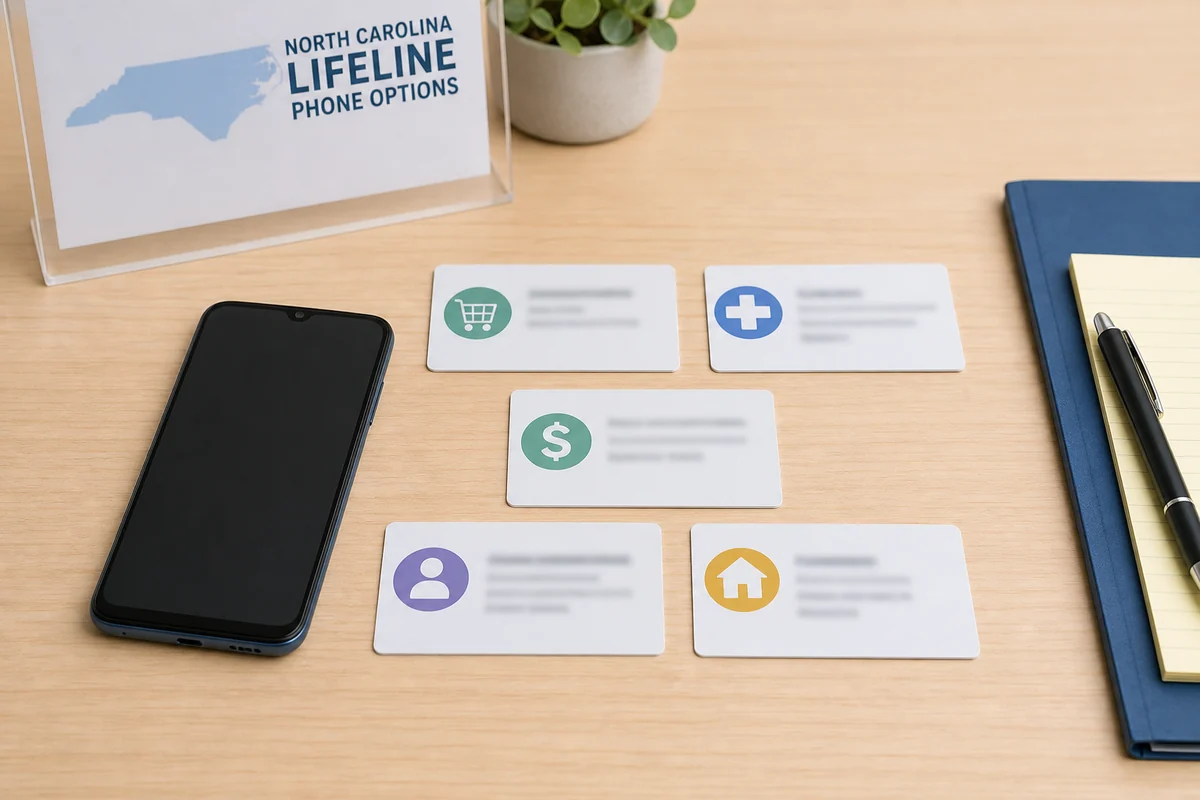
Medicaid Free iPhone Options in North Carolina
NC Medicaid through the North Carolina Department of Health and Human Services can be a Lifeline eligibility route. Medicaid participation may get you through the eligibility door, but it does not decide whether a provider offers an iPhone.
You may need a benefits letter, approval notice, current account screenshot, or another accepted proof if automated checks cannot confirm your eligibility.
Make sure ePASS, county DSS, FNS, NC Medicaid, income, identity, and address records match the Lifeline application, especially apartment numbers, rural routes, PO Boxes, old county records, managed-care notices, legal name changes, and recent moves after storms or housing changes.
Lifeline iPhone and Free Phone Options in North Carolina
Lifeline is the active federal phone and internet affordability program. The FCC oversees Lifeline, USAC administers it, and the National Verifier handles many eligibility checks.
Provider choices can differ across the Charlotte and Triangle metros, the Triad, coastal counties, the Outer Banks, Appalachian mountain communities, rural agricultural counties, college towns, military communities near Fayetteville and Jacksonville, and Tribal areas such as the Qualla Boundary.
Before applying, compare monthly service, talk and text, data, hotspot rules, activation, shipping, copay, phone condition, return policy, replacement rules, and recertification requirements.
Phone and Internet Access Issues Across North Carolina
North Carolina residents in Charlotte, Raleigh, Greensboro, Durham, Winston-Salem, Fayetteville, Cary, Wilmington, High Point, Concord, Asheville, Greenville, Gastonia, Chapel Hill, the Outer Banks, western mountain communities, rural eastern counties, and the Qualla Boundary may see different provider results because Lifeline availability and phone offers are checked by ZIP code.
NCDHHS, ePASS, county DSS offices, the NCDIT Division of Broadband and Digital Opportunity, the State Library of North Carolina, NC 211, the North Carolina Assistive Technology Program, public libraries, and North Carolina Community Action Association agencies can help residents research safe options and handle document barriers.
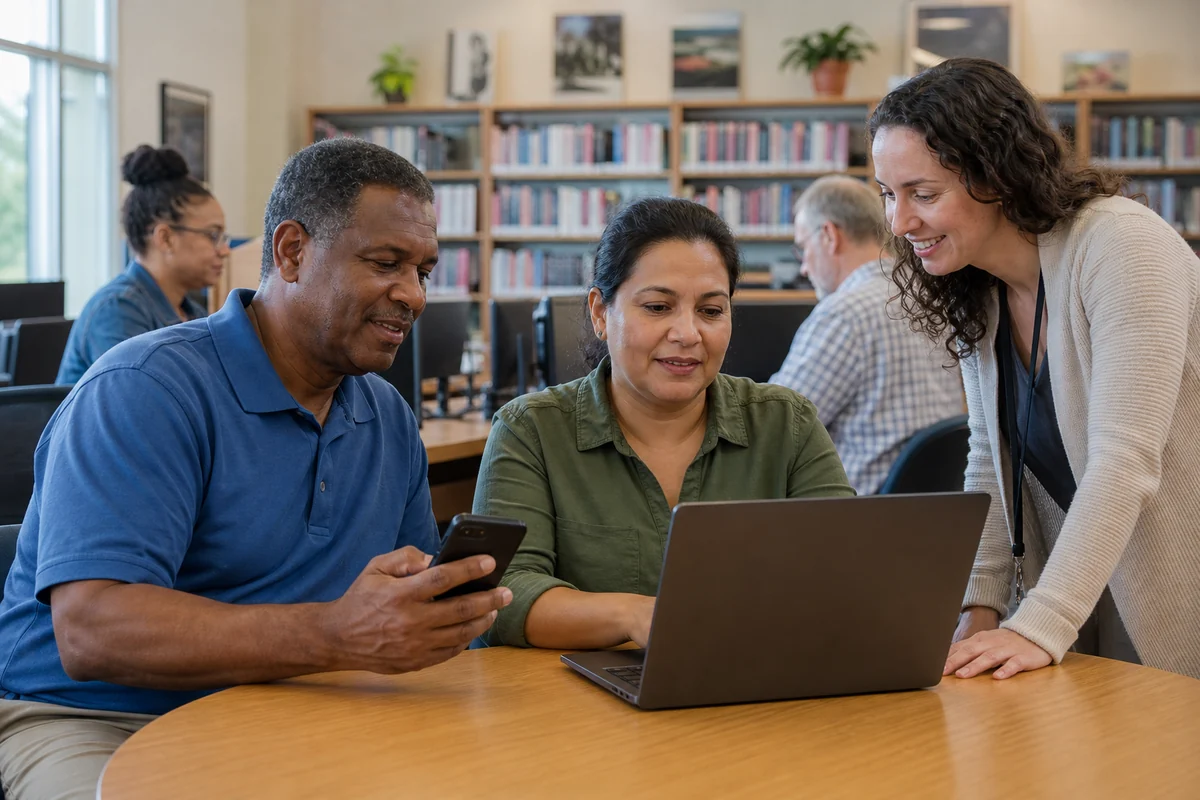
Safe Path to Check Lifeline iPhone Options in North Carolina
Follow these steps in order so you compare real provider terms instead of relying on phone-model hype.
Confirm eligibility
Check SNAP, Medicaid, SSI, income, housing, veterans, or Tribal eligibility in North Carolina.
Use official routes
Use Lifeline Support, the National Verifier, or a legitimate participating provider.
Search by ZIP
Provider options in North Carolina can change by city, county, and ZIP code.
Compare terms
Review phone stock, Android backups, 5G, fees, shipping, activation, and service terms.
Apply safely
Apply only through official Lifeline channels or a provider you can verify.
Avoid scams
Never share your EBT PIN, bank details, or card number for a phone offer.
Documents You May Need
Some applications verify quickly. Others need proof. Gathering documents before you start can prevent avoidable delays.
| Document type | Examples | North Carolina issue to check |
|---|---|---|
| Identity | Driver license, state ID, passport, Tribal ID, or other accepted proof | Name should match the application exactly |
| Address | Utility bill, lease, official mail, or benefit letter | Make sure ePASS, county DSS, FNS, NC Medicaid, income, identity, and address records match the Lifeline application, especially apartment numbers, rural routes, PO Boxes, old county records, managed-care notices, legal name changes, and recent moves after storms or housing changes. |
| Benefit proof | North Carolina Food and Nutrition Services (FNS/SNAP) through the North Carolina Department of Health and Human Services and county DSS offices, NC Medicaid through the North Carolina Department of Health and Human Services, SSI, housing, veterans, or Tribal proof | Use a current letter or accepted account proof |
| Income proof | Pay stubs, tax return, unemployment statement, or benefits statement | Income proof may need to cover the required period |
| Household worksheet | Lifeline household worksheet if another person at the address has Lifeline | Often needed when multiple adults share one address |
For step-by-step help, use the how to apply for a Lifeline phone guide.
Apply Safely in North Carolina
This is not an application form and this site does not collect sensitive data. Use these cards before applying through an official Lifeline route or verified provider.
Eligibility pre-check
Check SNAP, Medicaid, SSI, income, housing, veterans, or Tribal eligibility.
Document readiness
Gather identity, address, benefit, income, and household proof before starting.
ZIP code check
Search providers by ZIP code because options can differ by city, county, and rural area.
Device expectation
Check whether the offer is iPhone, Android, refurbished, 5G, paid, shipped, or limited by stock.
Approval and iPhone stock are not assured. Do not submit an EBT PIN, bank account, card number, or payment to anyone who claims they can unlock approval.
What To Do If No iPhone Offer Is Available
If you qualify for Lifeline but cannot find a real iPhone offer in your ZIP code, do not force an application through a suspicious website.
- Compare Android smartphone offers if reliable calling, texting, data, and benefits access matter most.
- Check free 5G phone options if newer network support matters more than the Apple brand.
- Use public library computers or Wi-Fi to compare providers and print documents.
- Avoid approval fees, social media-only sellers, copied provider names, and anyone asking for your EBT PIN.
Scam Warnings for North Carolina Residents
- Promises that skip eligibility checks or provider terms.
- Fake government logos or fake approval stamps.
- New ACP enrollment claims after ACP ended.
- Requests for your EBT PIN.
- Requests for bank or card details to release a phone.
- Social media-only sellers with no verified provider website.
FAQs About Free Government iPhones in North Carolina
Can I get a free government iPhone in North Carolina?
You may qualify for Lifeline service support in North Carolina, but an iPhone is not assured. Device availability depends on provider offers, ZIP code, stock, fees, condition, and current terms.
Does North Carolina EBT qualify me for a free iPhone?
North Carolina Food and Nutrition Services (FNS/SNAP) through the North Carolina Department of Health and Human Services and county DSS offices can help prove Lifeline eligibility, but EBT does not automatically provide an iPhone. You still need to confirm provider availability and device terms.
Can Medicaid help me get a Lifeline phone in North Carolina?
Yes. NC Medicaid through the North Carolina Department of Health and Human Services can support Lifeline eligibility. The phone you receive, if any, depends on provider stock and the current offer in your ZIP code.
Is Lifeline still active in North Carolina?
Yes. Lifeline is still active and can lower eligible phone, internet, or bundled service costs. It is separate from ACP.
Did ACP end for North Carolina residents?
Yes. ACP ended after the program ran out of additional funding, and households stopped receiving ACP discounts after June 1, 2024.
Are iPhones assured through Lifeline in North Carolina?
No. Lifeline eligibility does not assure an iPhone. Android phones are often more common, and any iPhone offer may be refurbished, limited, paid, or unavailable.
What if only an Android phone is available?
An Android phone may still provide reliable calling, texting, data, benefits access, work, school, telehealth, and family contact. You can compare other providers or consider a separate low-cost refurbished iPhone later.
What documents might I need in North Carolina?
You may need proof of identity, address, benefit participation, income, or household status. Make sure ePASS, county DSS, FNS, NC Medicaid, income, identity, and address records match the Lifeline application, especially apartment numbers, rural routes, PO Boxes, old county records, managed-care notices, legal name changes, and recent moves after storms or housing changes.
How can I avoid North Carolina phone offer scams?
Avoid anyone who promises approval without checks, asks for your EBT PIN, requests bank details, claims ACP is still issuing new discounts, or sells through social media only.
Final Helpful Summary
A free government iPhone in North Carolina is not assured, but Lifeline can still help eligible households lower eligible phone or internet costs. Verify eligibility, search providers by ZIP code, compare phone terms, and walk away from exaggerated phone promises.
External Resources
Use official sources when checking eligibility, documents, and provider availability.